
-
By magnet
-
July 22, 2026
- 0 Comment
Core Motor Components: Stator & Rotor – The Power Source Driving Equipment Operation
All motor-driven equipment, ranging from industrial servos and new energy vehicles to high-speed centrifugal machinery and flywheel energy storage units, relies on two core components for fundamental operation logic: the stator and rotor. These two parts realize energy conversion between electric energy and mechanical energy via permanent magnetic field coupling, acting as the “heart” of a motor. Most equipment malfunctions such as excessive heat generation, severe vibration, low efficiency and instability at high speeds stem from poor matching between stators and rotors or insufficient processing precision. This article first elaborates on their working principles in plain terms, then details our professional processing advantages and complete set solutions.
I. Respective Functions of Stators and Rotors
2. Rotor: Rotating Carrier Outputting Mechanical Power
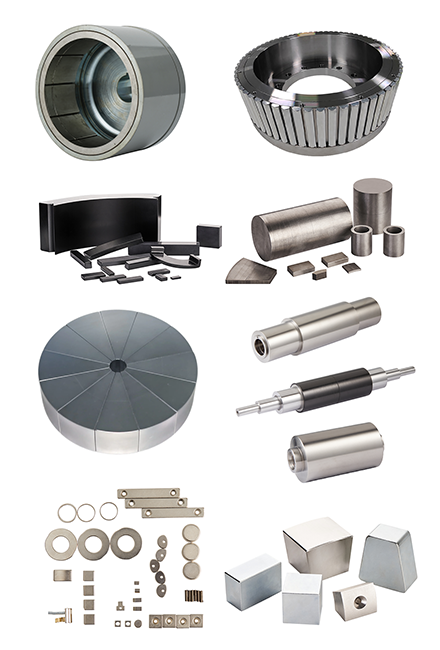
Mounted on the motor shaft, the rotor is the only rotating component. Permanent magnet rotors embed permanent magnets, which generate traction torque under the magnetic field produced by the stator, converting magnetic energy into rotational power for the shaft to output rotational speed and torque externally.
The rotor bears tremendous centrifugal force generated by high-speed rotation. Insufficient dynamic balance precision or structural strength will cause violent vibration and soaring eddy current loss at high speeds, and in severe cases, damage the complete machine bearings directly.

II. Product Introduction & Technical Advantages
1. High-Speed Motor Rotors (Compatible with High-Speed Spindles with Magnetic Levitation / Air Bearings)
Applicable Scenarios
Professional Processing Technology
Application Fields
2. Permanent Magnet Rotors (Compatible with New Energy & Servo Motors)
Applicable Scenarios
Professional Processing Technology
Application Fields
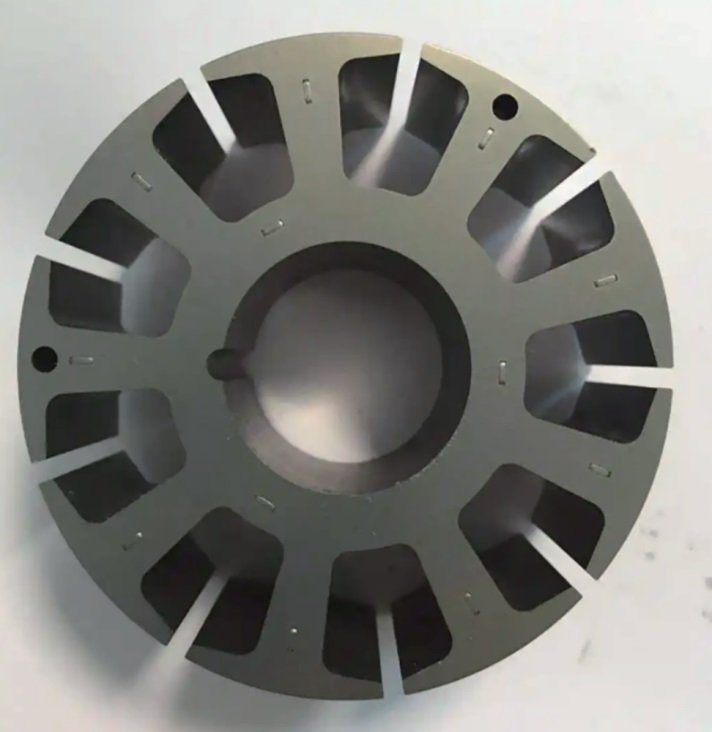
(II) Customized Stator Assemblies
Design Logic
Professional Processing Technology
- Customized Solution Design: We select exclusive core grades, silicon steel thicknesses, winding wiring layouts and heat dissipation structures based on customers’ equipment rotational speed and power, and establish standardized full sets of technical parameters.
Full-Dimensional Incoming Material Inspection: Iron cores, insulating materials and copper wires are inspected one by one upon warehousing to verify iron loss, insulation voltage resistance, dimensional tolerances and magnetic performance, eliminating defects at the source.
Integrated Precision Assembly: Positioning with special tooling, precision welding and integral insulation curing molding deliver high durability of winding insulation.
Stator-Rotor Matching Calibration: Air gap between stator and rotor is calibrated synchronously after assembly to optimize magnetic field coupling efficiency, keeping the overall machine temperature rise stably below 100℃.

III. Why Complete Set Selection Outperforms Separate Procurement?
Pain Points Analysis
Core Advantages of Complete Sets
- Homologous Unified Design: Rotors and stators are developed synchronously with unified standards for magnetic circuits, dimensions and heat dissipation. Air gap calibration is finished before delivery, eliminating secondary debugging work for customers.
- Full Working Condition Adaptability: We supply individual components or complete assemblies for ultra-high-speed equipment, new energy drive systems and energy storage centrifugal units.
- Full-Process Quality Control: Dual inspections covering rotor dynamic balance and stator insulation loss guarantee high consistent performance of finished complete sets.
- Flexible Customization: Core, magnet and winding structures can be adjusted according to equipment operating conditions, meeting four core requirements: low loss, low vibration, low temperature rise and long service life.

IV. Conclusion
Stators and rotors are inseparable core matching parts of motors. The stator generates driving magnetic fields while the rotor converts and outputs power. The processing precision and matching degree of the two directly determine the overall performance of a motor.
We own complete production lines for high-speed rotors, permanent magnet rotors and customized stators. We can supply all standard individual components mentioned above, as well as customized integrated stator and rotor assemblies tailored to industrial equipment demands, delivering stable, high-efficiency and low-loss core component solutions for high-end motor manufacturing.