
-
By magnet
-
August 28, 2026
- 0 Comment
High‑Speed Motors with Tens of Thousands of RPM Keep Failing? The Core Plaguing Engineers Is Finally Resolved
Engineers engaged in high‑end motor R&D have most likely experienced frustrating moments like this.
The prototype drawings are flawless, all parameter simulations meet specifications, controllers are repeatedly tuned and optimized, and top‑tier components are selected for bearings, housings and wiring harnesses. Yet as soon as bench‑testing at high‑speed commences, problems emerge one after another.
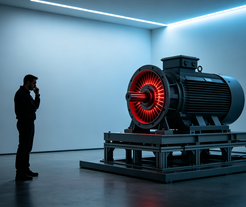
When the rotational speed rises to 30 000 rpm, the machine body overheats within half an hour. Under continuous full‑load operation, motor noise grows louder and vibration becomes increasingly severe. Most critically, magnetic steel may detach on some prototypes, or even the rotor bursts during high‑speed rotation, completely wrecking the whole prototype.
Teams first rush to troubleshoot control algorithms, heat‑dissipation structures and assembly processes, yet weeks of work yield no progress. Only later do they realize: what ruins high‑end high‑speed motors is rarely visible components, but the easily‑overlooked high‑speed permanent‑magnet rotor at the heart of the machine.
In high‑end equipment sectors including new‑energy electric drives, industrial centrifugal compressors, precision high‑speed spindles and aerospace energy storage, motors are no longer basic components that “just need to spin”. Today’s industry competition centers on higher rotational speed, smaller footprint, higher efficiency and longer service life.
Nevertheless, numerous R&D teams hit the same bottleneck: the high‑speed rotor, though seemingly simple in structure, represents a critical “heart‑level barrier” for high‑end equipment development.

Why Are High‑Speed Rotors Notorious for Frequent Failures in the Industry?
Low‑speed rotors for general motors operating at several thousand rpm feature high fault tolerance. Slightly crude craftsmanship or marginal precision deviations barely impair normal operation. Once rotational speed exceeds 10 000 rpm and climbs to tens or even hundreds of thousands of rpm, however, every tiny process imperfection and structural defect gets amplified proportionally to the square of rotational speed.
That explains why prototypes from many large enterprises pass bench tests yet fail in mass production, or operate normally in short‑term runs but malfunction after long‑term service.
Under ultra‑high‑speed conditions, rotors face three fatal challenges‑‑unavoidable pain points across the whole industry:
Tearing Force from Extreme Centrifugal Load
During high‑speed rotation, rotors are subject to enormous centrifugal force. Permanent‑magnet magnetic steel is inherently brittle and exhibits poor tensile strength. Without qualified carbon‑fiber sleeve technology, magnetic steel behaves like shattering glass spinning at high speed, liable to fly out or burst at any moment.
Conventional carbon‑fiber sleeves available on the market appear tightly wrapped but conceal hidden risks such as delamination, microcracks and debonding. No abnormalities appear in early‑stage operation, yet after hundreds of continuous operating hours, the sleeves gradually fail and trigger complete machine breakdowns‑‑a root cause of frequent industry failures.
Severe Thermal Stress from High‑Frequency Eddy‑Current Loss
Higher rotational speed brings higher magnetic‑field frequency. Solid magnetic steel and ordinary metal sleeves generate massive eddy‑current losses, which drive rapid rotor temperature rise. Mild consequences include deteriorated motor efficiency and increased energy consumption; severe outcomes involve irreversible demagnetization of permanent magnets and total motor failure.
Many R&D teams recognize that segmented magnetic steel and Halbach magnet‑array structures can mitigate such issues. However, poor manufacturability and inconsistent mass‑production quality hinder large‑scale implementation.
Balancing Constraints Requiring Micrometer‑Level Precision
General motors satisfy requirements with G2.5‑grade dynamic balancing, whereas high‑speed rotors demand G0.4 / G1 ultra‑high‑grade balancing. Even an imbalance equivalent to the thickness of a human hair will induce violent vibration at hundreds of thousands of rpm, continuously abrading bearings, distorting magnetic fields, and ultimately giving rise to abnormal motor noise, shaking and drastically shortened service life.
Another intractable issue lies in magnetic‑field consistency. Uneven magnetic‑pole strength and zero‑position offset of rotors directly produce torque ripple and deteriorated NVH performance, which consume massive debugging effort without thorough resolution.
Besides the above‑mentioned issues, challenges such as material‑matching difficulties, rapid high‑temperature aging, prohibitive verification costs and non‑repairable damage trap many enterprises in a vicious cycle: lengthy R&D cycles, low mass‑production yield and high after‑sales risk.

How Rotor‑Related Pain Points Constrain High‑End Equipment Upgrading
What looks like a minor rotor problem actually hinders advancement across multiple high‑end sectors:
- For high‑speed electric drives of new‑energy vehicles, performance ceilings cannot be broken due to rotor temperature‑rise and vibration limits, despite pursuit of smaller size and higher power density.
- Industrial centrifugal compressors and vacuum pumps require 24‑hour non‑stop operation. Poor reliability of conventional rotors leads to frequent shutdowns and maintenance, substantially raising operational costs.
- Tiny rotor‑induced vibration prevents CNC high‑speed spindles and PCB precision spindles from achieving top‑tier machining accuracy.
- Aerospace applications, UAVs and flywheel‑energy‑storage systems impose stringent requirements for rotor heat resistance, operational safety and long service life‑‑demands most supply chains cannot fulfill.
For a long time, high‑performance high‑speed rotors heavily relied on imports, which came with high costs, long lead times and tightly‑controlled core technologies‑‑constituting a major bottleneck restricting domestic localization of high‑end equipment.
Breaking Industry Deadlock: Hangzhou CJL Magnet Power Technology Co., Ltd. Delivers Optimal Solutions
Essentially, all industry‑wide pain points stem from insufficient end‑to‑end capabilities covering materials, magnetic‑circuit design, manufacturing processes and inspection. Most suppliers merely perform simple magnetic‑steel processing and assembly without proprietary core technologies, self‑developed materials or comprehensive validation systems, making them incapable of manufacturing high‑speed rotors for extreme operating conditions.
Founded to focus exclusively on high‑speed permanent‑magnet rotor technology, Hangzhou CJL Magnet Power Technology Co., Ltd. rejects crude OEM‑style production. The company has built a full‑value‑chain capability covering proprietary permanent‑magnet material R&D, magnetic‑circuit simulation design, carbon‑fiber winding molding, ultra‑precision machining, ultra‑high‑grade dynamic balancing and full‑dimensional reliability validation. It delivers turnkey finished‑product solutions directly deployable for installation to enterprises across diverse sectors, resolving prevailing industry pain points.
- Source‑controlled materials to resolve magnetic‑field‑consistency challenges Unlike competitors that merely assemble outsourced magnetic steel, CJL Magnet Power develops customized NdFeB and 2:17 SmCo permanent‑magnet materials. Base materials with tailored temperature resistance and magnetic‑performance characteristics are selected for different operating conditions. Rigorous process control restricts magnetic‑field inconsistency among individual poles of a single rotor to ≤ 3 %, delivering industry‑leading magnetic zero‑position precision. This fundamentally mitigates motor torque ripple, NVH noise and control‑complexity issues and greatly simplifies motor commissioning.
- Mature core technologies to eliminate eddy‑current‑induced overheating The company has mastered mass‑production processes for Halbach magnet arrays, paired with finely‑segmented insulated magnetic‑steel configurations. Eddy‑current losses under high‑speed and high‑frequency operating conditions are substantially reduced, rotor temperature rise is effectively suppressed, and motor efficiency as well as power density are significantly improved. Persistent high‑speed overheating and susceptibility to demagnetization are fundamentally addressed.
- Proprietary carbon‑fiber‑winding technology establishes robust high‑safety safeguards Proprietary precision‑winding technologies for T800 / T1000 carbon‑fiber with accurate tension control and optimized curing processes solve chronic defects of conventional carbon‑fiber sleeves including delamination, microcracks, debonding and high‑speed cracking. Finished rotors support ultra‑high peripheral‑speed applications, achieving safety and reliability comparable with premium imported alternatives while cutting customers’ procurement costs substantially.
- Top‑tier precision manufacturing and comprehensive inspection guarantee mass‑production reliability Equipped with high‑end CNC machine tools, professional high‑speed dynamic‑balancing testers, magnetic‑field scanners, coordinate‑measuring machines and non‑destructive‑testing equipment, CJL stably achieves G0.4‑grade ultra‑high dynamic balancing and micrometer‑level geometric‑tolerance accuracy. Rotors undergo high‑temperature aging, dynamic balancing, non‑destructive inspection and other tests to eliminate latent quality risks, making them well‑suited for stringent‑requirement scenarios such as aerospace‑grade equipment, precision spindles and industrial compressors.
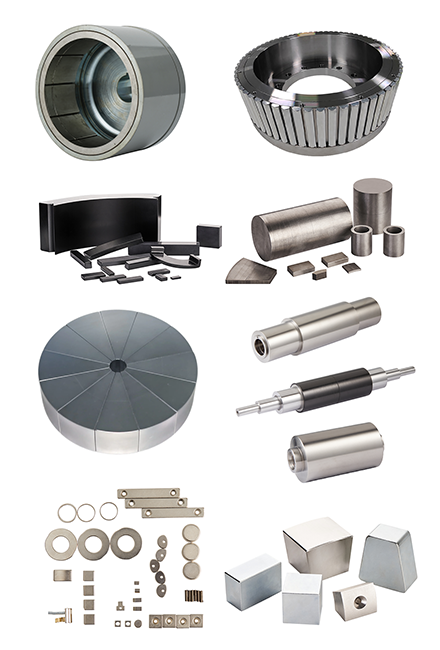
- Full‑category customization and one‑stop services reduce R&D barriers The product portfolio covers full‑range rotor types: room‑temperature high‑speed NdFeB rotors, high‑temperature SmCo rotors, IPM interior‑permanent‑magnet laminated rotors and carbon‑fiber‑sleeve surface‑mounted rotors. Beyond finished‑product delivery, the company provides technical support including rotor‑dynamics simulation, stress verification and application‑condition optimization. Customers benefit from shortened R&D cycles, mitigated test risks and accelerated mass‑production roll‑out.

Advancing Equipment Upgrading Through Breakthroughs in Rotor Technology
Though a single component, the high‑speed rotor dictates the efficiency, service life and safety of the complete high‑speed motor. Most field‑failure incidents do not originate from design flaws, but from combined shortcomings in rotor materials, manufacturing processes, dynamic balancing and sleeve technologies. Leveraging vertically‑integrated self‑developed manufacturing capabilities, Hangzhou CJL Magnet Power Technology Co., Ltd. addresses industry‑wide rotor‑related pain points including excessive temperature rise, severe vibration, poor consistency and insufficient high‑speed safety. It supplies proven, mass‑producible high‑speed‑rotor solutions for new‑energy, industrial‑fluid‑machinery, precision‑spindle, aerospace and energy‑storage sectors.
If your project encounters challenges in high‑speed‑rotor R&D, testing or mass‑production, please feel free to reach out. We provide targeted technical benchmarking and customized solutions.